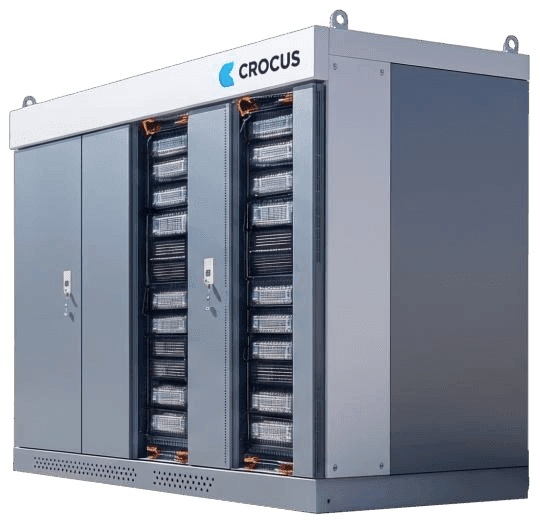
- What is a solid-state transformer?
- Where a conventional transformer simply converts voltage, a solid-state transformer controls voltage, current and power flow in real time using semiconductor switching. Because conversion is switched rather than fixed, the device can regulate its output and report its state while operating.
- Why do AI data centers need solid-state transformers?
- NVIDIA has proposed 800 V DC as the architecture for next-generation data centers, with SST as the key equipment for realising it. At the same wire gauge, 800 V DC carries 157% more power than conventional AC infrastructure, which lowers infrastructure cost; it removes the several inefficient AC-DC conversion stages of existing systems; and it makes transformers and phase-balancing equipment unnecessary, reducing system complexity and potential failure points.
- What is the difference between Acelo SST Hybrid, DC800 and SOP?
- Hybrid operates alongside an existing transformer and precisely controls the secondary-side voltage, so a site can improve power quality and save energy without replacing its main transformer. DC800 converts medium-voltage AC directly to 800 V DC for data centers and other DC loads. SOP is applied at the normally-open point between distribution feeders to actively control active power, reactive power and voltage between them.
- Can an SST be installed without replacing the existing transformer?
- Yes. Acelo SST Hybrid connects on the secondary side of the existing main transformer, so no removal is required. Because there is no large-scale grid replacement work, downtime and disruption to operations are avoided, and the initial capital expenditure is far lower than a full replacement.
- Can an SST help with renewable energy variability?
- Yes. Generation such as solar varies through the day. Solid-state conversion levels that variability before it reaches the load, so the downstream system sees a steadier supply than the source provides.